Is it OK to Go to Work Drunk?
Recently I had the privilege to speak with the Calgary Wellness Network about sleep and productivity in the workplace.
The wellness directors and disability managers in the room were surprised to learn that roughly 20 hours of wakefulness produces a performance impairment equal to a Blood Alcohol Content of 0.10%.
This indicates an impairment equal to being legally drunk!
Even 17 hours of wakefulness produces a performance impairment equal to a BAC of 0.08%. This would be a day when you have a 630 AM start and then you’re not tucked into bed until 1230. You are travelling for work, or have early morning meetings across time zones, then are up late with work or family concerns. Not uncommon at all, is it?
Yes, typical. But not recognized as a cultural and societal problem.
But it is a serious one.
Here are some characteristics of sleep deprived people in the workplace; they show:
- poor judgement
- slowed reaction time
- reduced vigilance
- distraction
- risky decision-making
- poor concentration, irritability, impatience, and depressed mood
- and they have more accidents, errors, and injuries.
The very same characteristics of someone who had had just a little too much to drink.
So, it is OK to conduct a meeting with a client while drunk? To make decisions about money and services while drunk? To do technical and detailed work that affects the safety of yourself and others while drunk? To drive to work while drunk?
No. Absolutely not.
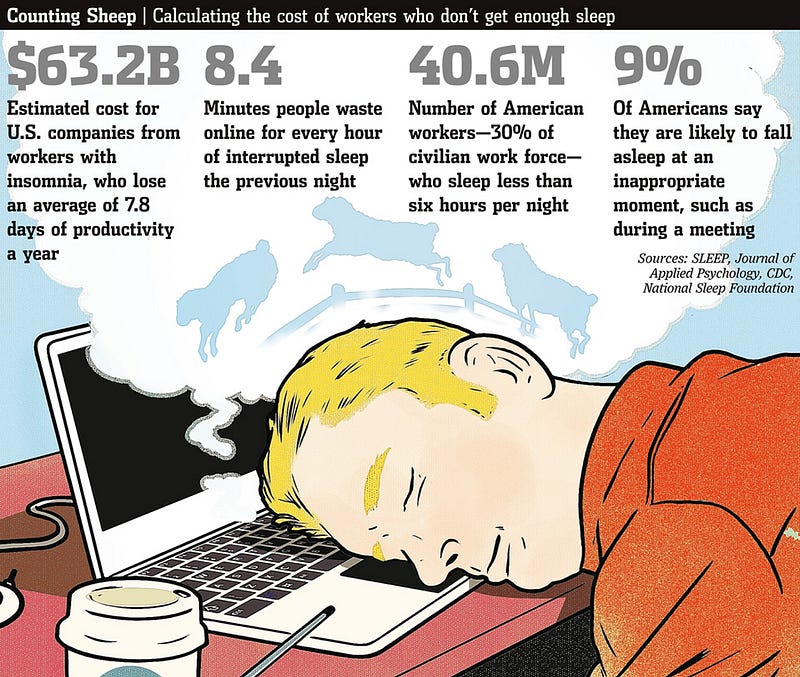
Plus, sleepy people are likely poor communicators with teams and colleagues, and they don’t listen well. They may come to work late, leave early, or just be plain absent. They are fatigued, have headache, and are lethargic and distracted.
Studies of people in leadership roles show that they misinterpret social cues, have a lack of empathy, may bully and overreact emotionally when fatigued.
Why do we allow this to be acceptable in the workplace?
Why don’t we challenge colleagues when they say, “Wow, I slept only 5 hours last night because I working late on this report.” We need to say to them, “That’s just not OK.”
And then we can say, “How can we support each other to get more sleep, and be more resilient, engaged, and satisfied at work?” There are lots of ideas that corporations can entertain.
Leaders and managers, let’s get the conversation started now.
Here are some things people say they need…
They need flex time so the night owls can get that extra hour of sleep that will make a world of difference in their engagement that morning. They need options to work from home occasionally to save commuting time. They need quiet dark nap rooms or zones where they can set their phones for 20 minutes, and wake up creative and refreshed.
Executives, you can demonstrate commitment to health and safety by implementing policies around electronics use. For example, no phone use after 9 PM, shut the server down one hour after quitting time, block weekend outbound emails, etc. You can set sleep-friendly policies for travel and jet lag, you can consider time zones when planning global meetings. You can provide offices and workspaces with natural light. You can give a financial reward to employees who sleep 8 hours. You can provide cognitive behavioural therapy for insomnia in your EAP program. You can provide screening for sleep apnea.
And most importantly, you can model healthy sleep behaviours. You can give your employees permission to prioritize sleep.
Drunk employees are unacceptable. Sleepy employees are risky in the same way.
A sleep-friendly workplace improves the bottom line in business and more data is proving this each day.
It’s time for organizational change to reframe sleep.
Let me know if I can help.